Author: ewladmin

  • Writer Life: Committing yourself to the profession

    Writer Life: Committing yourself to the profession

    Once you make a choice to become something professionally it’s imperative that you know what it takes to accomplish it, are dedicated to it, and understand that you must live the life if you want to be whatever it is. That is very true with any profession not just writing. If you want to be a good writer who earns the living they need and want and to enjoy your life, you’ll need to understand that you need to work on committing yourself to the profession.

    Be Dedicated

    The very first thing you need to do is know what kind of dedication is needed to become a sought-after writer. If you’re going to be a writer, it takes more than just understanding the language you’re using. It also requires that you keep at it during the difficult times. As a writer, you must not accept things like “writer’s block” or anything that gets in the way of you doing your job. Imagine if a doctor had “doctor’s block” how would that work?

    Improve Your Skills

    Work on improving your skills. As a writer, it’s important for you to learn about all types of writing, to improve your vocabulary, and to read about the types of things you write about. Doing this is going to help you enjoy writing more because you’ll have more to pull from when you sit down to write if you keep working on improving your writing skills.

    Invest in Professional Development

    There are many types of professional development that you can attend from writer workshops to online marketing workshops. Whatever it is that you want to learn that is even slightly related to what you do can help you improve your work.

    Learn About Your Audience

    It depends on the type of writing that you do, but you must know who your audience is and what makes them tick to be able to write for them. If you’re a ghostwriter, you’ll need to know all about the person you write for, but also about the people who will read the work to ensure you get it right.

    Build Your Portfolio

    Even if you don’t have a client to write for right now, it’s important to build your portfolio. This can happen simply by writing about the types of topics you want to write about. That way you have something to show potential clients.

    Market Always

    If you want clients, it is important always to keep marketing. You can market via your website, social media, snail mail, email, and in person. You should do all of the above marketing to get the word out about your services.

    Write Daily

    This is probably the most important advice for anyone who wants to be a writer. Do it. Write. Write every day. Write all the time. Write about everything. Write about anything. Practice writing and getting words out every single day.

    The fact is, if you’re not committed, you’re doomed to fail. Think about what it takes to become a doctor? Is becoming a writer really any different? Other than societal perception writing is a very important career choice that can make a big difference. Writing is used in all aspects of life. Devoting to learning the profession in the same way a doctor learns to be a doctor through education, doing it daily, and marketing can make a huge difference in your ability to achieve success as a writer.

    Get More Content Like This:

    If you found this advice helpful, you’ll find more of it in our Elite Writer’s Lab, and the good news is, you can join and get instant access to a huge library of content, just for writers, by clicking here. And you can get in for just $1.

    Quick Start Success Kit
    Our Exclusive Quick Start Success Kit


    You’ll also have access to a huge library of other expert interviews, courses and resources for turning your writing skills into a living.  You’ll love our Quick Start Success Kit that will you publish and market your first book or information product quickly!

  • How to Get Media Coverage for Your Book

    How to Get Media Coverage for Your Book

    When you finish your book, you probably feel good. However, when it comes to becoming a successful author, writing is only part of the process. Now you need to market your book, and part of marketing requires that you obtain as much media coverages as possible as quickly as possible so that you stay at the top of mind for the audience. Let’s look at ways to accomplish this.

    Create a Book Trailer & Website – At least a few months before launching your book you will need a website or page for your book. A creative thing to do if it works for your book is to create a book trailer which is just a nice movie style video describing your book without giving away all the details.

    Create an Advance Review Copy – When your book is done make sure you create an advance review copy. Some people give their actual book, but others hold some of it back with specialized review copies that aren’t inclusive of the entire book. It’s up to you how you do this, but either way, giving them something to go on is helpful.

    Solicit Testimonials When Possible – Once you’ve given your review copy out and given enough time for them to read the information ask for reviews. It’s worth it to ask almost anyone willing to read your book but most especially the press, professional reviewers, and other subject matter experts.

    Develop a Focused Press Release – You may need more than one press release. You want to send them to the right people who will help get the word out about your book and sometimes you may need to include different pieces of information. Think about who is going to read it, then create it accordingly.

    Target Media Partners Carefully – When you do send out your press release or even a pitch for an interview it’s imperative that you target the right media partners. You don’t want to blanket the media with your information. Instead, you want to pick and choose very carefully targeted partners who market to your audience.

    Speak Publicly & Get Interviewed — Seek to get interviewed on TV, radio, online, in person, at events and more. The more you speak via interviews or as a talk or speech, the better. When people hear you talk, they will start to trust that your book is also worth a read.

    Tie Promotions with Other Events – One way to get buzz going is to tie your promotions with other events. For example, if you wrote a book about your journey with breast cancer, you may be able to talk at related events and give a percentage of profits to a charity that helps women and men with breast cancer.

    Promote Everything Wherever Your Audience Is – Marketing and promoting is a continuous thing that should not ever stop when it comes to getting the word out about your book. Carry your book and cards and other information with you so that you can give it out whenever it seems appropriate.

    Getting media coverage for your book is an important part of being a published author. Even if you went with a big-name publishing house, you’d still be responsible for the marketing efforts. The only exception to this is if you are a big name with a huge following already, then they will help you more marketing from a publishing house. Until then, you’re going to have to do it yourself, but you can also hire people to help you.

    Get More Content Like This:

    If you found this advice helpful, you’ll find more of it in our Elite Writer’s Lab, and the good news is, you can join and get instant access to a huge library of content, just for writers, by clicking here. And you can get in for just $1.

    Quick Start Success Kit
    Our Exclusive Quick Start Success Kit


    You’ll also have access to a huge library of other expert interviews, courses and resources for turning your writing skills into a living.  You’ll love our Quick Start Success Kit that will you publish and market your first book or information product quickly!

  • Copywriting Strategies That Set You Apart from the Competition

    Copywriting Strategies That Set You Apart from the Competition

    One of the most important aspects outside of your product or service is the copywriting and content that you use to get more sales. After all, you can have the best product ever created but if no one knows about you, you’ll make no sales. The copywriting strategies you use can set you apart from the competition.

    1. Develop Audience Personas – Your job when writing any copy is to get to know your audience as intimately as possible and to engage with them. Creating audience personas helps to give you the right information on who you’re writing to – who you’re trying to persuade with your writing. You can create more than one audience persona too. In fact, you should map the audience personas you create to their buying cycle, as well as by targeting the various audiences who need the product.

    2. Understand Your Products – Study the benefits your products offer your audience. If you’re not sure, ask the people who have bought or tried them. What do they feel are good benefits of your products? It might help you to write a list of features, then beside each feature write down the benefit of it for your audience so that your copywriting focuses only on the benefits.

    3. Learn Persuasive Writing – Persuasive writing is all about finding the right words to convince the reader to believe your information is the best advice and your product is the best solution for them to solve all their problems. You want them to build up the “know, like, trust” factor with your writing. Many devices are used in persuasive writing such as metaphors, similes, repetition, and parallelism.

    4. Write Headlines with Clarity – The job of the headline is to get the audience to click through so that they can read the next sentence. The aim is to create a headline that is clear. The best headlines mention the solution, give a time limit and address objections. But you don’t have to include all three every single time in each headline; just using one will make a huge difference.

    5. Learn AIDA – The acronym stands for Attention, Interest, Desire, and Action. That means the content you create should grab their attention, trigger their interest to learn more, and then create a strong desire to fix their problem, and of course always include a call to action. If you follow this idea for every piece of content – whether it’s a sales page or an email message, you should be able to increase your conversions exponentially.

    6. It’s All About the Audience – Your audience is trying to learn something about a specific topic. They’re looking for answers to their questions so that they can find solutions for their problems. When you tell your own story, it should be from their perspective and not from your own. Why you’re the right person should make them feel comfortable in working with you due to your experience, expertise, and knowledge.

    7. Test Everything – Thankfully, the technology exists today to help you ensure that you’re using the best headlines, best images, and the best words for your copy. Test different headlines, test different types of sales pages and test various places on your website for the best response to your efforts.

    The right copywriting strategies above can make a big difference in your clicks and conversions. Use these tips to improve your copywriting and set yourself apart from the competition.

    Get More Content Like This:

    If you found this advice helpful, you’ll find more of it in our Elite Writer’s Lab, and the good news is, you can join and get instant access to a huge library of content, just for writers, by clicking here. And you can get in for just $1.

    Quick Start Success Kit
    Our Exclusive Quick Start Success Kit


    You’ll also have access to a huge library of other expert interviews, courses and resources for turning your writing skills into a living.  You’ll love our Quick Start Success Kit that will you publish and market your first book or information product quickly!

  • How to Find High-Paying Freelance Writing Jobs

    How to Find High-Paying Freelance Writing Jobs

    If you want to be a freelance writer one of the tasks you have before you is to find work. As a freelancer, you’re responsible for finding the work to make bids on so that you can keep your cash flow positive. Locating high-paying freelance writing jobs is possible, but you need first to be ready and then know where to find them.

    Know Your Audience

    Understanding who you want to write for is an imperative that cannot be skipped. Many people will often say that they’ll write for anyone about anything because they’re fast at learning topics. However, it’s hard to market that. You can take that work if you want to as it comes, but you should market with a focus to the audience who can afford to pay you what you want to earn and who need work about topics you are familiar with.

    Get Clear on The Types of Projects You Want to Do

    Knowing the type of projects, you want to write also helps. For example, if you’re going to be a grant writer that is an entirely different type of writing than if you want to ghostwrite Young Adult novels or write blog content about all things WordPress, for instance. You need to know what you want to work on and who needs that type of work.

    Know the Movers & Shakers

    Once you’ve identified your audience and the types of projects you want to work on, now you need to find the movers and shakers in that arena. Not the writers. You want to find experts to follow in the niche who have followers. Those followers may be people who need the writing, and the expert may also need the writing. It totally depends on the niche, but remember that you don’t want to always hang out with other writers you want to hang out with people who need your services.

    Publish Your Own Work

    While you’re working on finding high-paying freelance writing jobs you want to keep writing. The only real way to get work in a creative arena like writing is to have samples in the niche you want to write about including the different types of content from blog posts, to emails, to copy, to eBooks and so forth. Publish it on your own site or to Amazon as a Kindle book so that you can show people your work. While you’re writing, you might as well get published in industry magazines (for pay and for free) using your own byline. This will help you get more work.

    Set Up Your Website / Portfolio

    Using the information that you’ve gathered, and your knowledge about your audience and the niche you want to write in, set up your website as a portfolio but also as a landing page that helps weed through the audience and onboard new clients. For example, you can add a scheduling app to let them schedule discovery calls to a landing page offering your writing services.

    Get the Right Systems & Tools

    Don’t skimp on systems. At the very least you need a three-stage funnel which will require an email autoresponder, a website, and a scheduling app. The way it works is that someone sees a link to your site on your Author Profile on Amazon, or LinkedIn (or anywhere) they click it. Once clicked they will go to a landing page to sign up for a discovery call. Then they’re on your email list, and once you talk to them, they’ll be that much closer to choosing you if you’re right for each other.

    Pitching regularly is a necessity if you want to keep your client roster full. Setting up automation to make some of the pitches easier to come by is always helpful, but you’re still going to have to submit a lot of pitches. Most people will have to make about 10 pitches to get one or two projects.

    Get More Content Like This:

    If you found this advice helpful, you’ll find more of it in our Elite Writer’s Lab, and the good news is, you can join and get instant access to a huge library of content, just for writers, by clicking here. And you can get in for just $1.

    Quick Start Success Kit
    Our Exclusive Quick Start Success Kit


    You’ll also have access to a huge library of other expert interviews, courses and resources for turning your writing skills into a living.  You’ll love our Quick Start Success Kit that will you publish and market your first book or information product quickly!

  • Free Ways to Boost Your Knowledge in A Given Niche

    Free Ways to Boost Your Knowledge in A Given Niche

    When you want to learn information about any topic this information will help you do it. The biggest thing is that you need to open your mind to be a life long learner. No matter the niche things do change with time. These free ways to boost your knowledge in a given niche will make all the difference for you.

    Interview Subject Matter Experts

    This is one of the best ways to learn something about any niche. Find people who already know and ask the questions that you need to know. It will help you to get some background so that you know what questions to ask though so do educate yourself before you contact subject matter experts.

    Read Industry Journals & Magazines

    This is a great way to get some knowledge. When you read just read and don’t even try to take notes at first. Reading as much as you can before you start choosing references and ideas is usually best so that you know what is accurate and what is not. The reason is that even a journal may contain information that is contrary to what you want to tell the audience. Getting lots of information from all ideas and sides is best.

    Read Books

    Yes, you can still go to your local library and check out books free. You may also be able to access digital books free via your local public library. Check out old books and new books on the topic so that you can learn where people are getting their current ideas from and how everything developed to where it is today.

    Listen to Podcasts Hosted by Industry Experts

    Sign up for podcasts about the topic and listen. You may have to listen to a lot before you find someone who resonates with you. Check on the people who are passing themselves off as experts to ensure that they’ve done what they said and that they are true experts.

    Commit to Immersing Yourself in The Niche

    They say it takes 10,000 hours to become an expert on any niche. If that’s your goal, you can do it. Just realize that it takes time. You will need to get involved in the niche intimately to learn what you can about it. That means signing up for everything you can, talking to everyone you can, and committing to doing it.

    Go to Live Events

    Nothing is better than a live event about a particular niche. This is a place you can often get ideas from several experts in the niche at one time. Often live events have multiple speakers and presenters all claiming expertise. This is a good way to find people to connect with.

    Connect with Influencers

    Once you start meeting people within the niche start connecting to them more. Follow them on social media, get their email address, and if you can find out their cell numbers to hat you have a direct connection to them. Make it profitable and interesting for them to provide that connection to you.

    Even if a product or service does not change, and the customer demographics do not change, the customers still do transform over time in terms of their likes, dislikes, and fears. It’s important for you always to keep learning.

    Get More Content Like This:

    If you found this advice helpful, you’ll find more of it in our Elite Writer’s Lab, and the good news is, you can join and get instant access to a huge library of content, just for writers, by clicking here. And you can get in for just $1.

    Quick Start Success Kit
    Our Exclusive Quick Start Success Kit


    You’ll also have access to a huge library of other expert interviews, courses and resources for turning your writing skills into a living.  You’ll love our Quick Start Success Kit that will you publish and market your first book or information product quickly!

  • Choosing Which Goals to Focus On

    Choosing Which Goals to Focus On

    Setting goals for your business each year is an important part of business planning. In fact, studies have shown that people who write down their goals are more likely to achieve them. You already know that goals need to be specific, measurable, attainable, realistic, and time-sensitive, also known as “SMART” goals. But, how do you choose which goals to focus on each year – or anytime for that matter?

    It all comes down to the fact that if you don’t know where you want to go, you can’t possibly set up a map with any direction to get there. But if you do know what to focus on and what the end goal is, you’ll be able to better set up a system for success. However, to choose just the right goals to follow, you’ll need to know how.

    Fewer Goals Are Better – Set one goal for each part of your business. For example, there are five parts to every business no matter what: value creation, marketing, sales, value delivery and finance. If you can set one goal for each of these areas, you’ll be set for the year. Make some small, but only make a number of goals you can reasonably meet.

    Goals Should Fit Your Overall Business Mission – Take a look at your mission statement and compare every goal you make to how it affects that mission statement. If it doesn’t fit in, then it can’t be a goal of yours. When you match business goals with your mission statement, it’s going to be a winner.

    Base Future Goals on Past Achievements – Always audit the results of last year before you make new goals. You may also want to carry over some goals that you didn’t quite achieve, or continue by making those goals even higher. For example, if last year you had a goal to double your income and you achieved it, you may have a new goal to double your income again.

    Understand Your Reasons for Doing Anything – If you don’t know why you’ve made a goal, it’s not going to happen. Know your why so that you can achieve the goal, based on something you have a passion for. It won’t work if you’re trying to achieve things you don’t care about and don’t understand why you’re doing them.

    Does the Goal Stretch You Enough? – It’s important to ensure that the goal is something you know you can do, but that will push you a little bit out of your comfort zone. Ensure that you can use the goal to map the actions you need to take to succeed.

    Organize Goals by Priority – Once you set the business goals that you know you can likely achieve, ensure that you organize them by priority. The priority you choose for your goals will depend on your business model, as well as your “big giant dream goal” for your business and how these goals fit in.

    Set Benchmarks — Set up frequent targets that enable you to check up on how you’re doing with your goals during the year. Don’t just work in the blind. Know how you’re doing at certain times throughout the year to ensure that everything you thought would work is working.

    Ask Customers – One way to come up with some of your goals is to ask your customers and your audience what they want to see from you this year. Often customers can come up with the best ideas that you never thought of.

    Choosing which goals to focus on this year takes an understanding of the past, as well as where you want to go in the distant future. If your yearly goals are based on your future big giant dream goal, then you’re heading in the right direction.

    Get More Content Like This:

    If you found this advice helpful, you’ll find more of it in our Elite Writer’s Lab, and the good news is, you can join and get instant access to a huge library of content, just for writers, by clicking here. And you can get in for just $1.

    Quick Start Success Kit
    Our Exclusive Quick Start Success Kit


    You’ll also have access to a huge library of other expert interviews, courses and resources for turning your writing skills into a living.  You’ll love our Quick Start Success Kit that will you publish and market your first book or information product quickly!

  • Making Your Metadata Work for You

    Making Your Metadata Work for You

    Don’t get scared. Metadata may look like a scary, confusing, and complicated word but it really isn’t. Simply put metadata, according to Dictionary.com is “the information that you use to describe and define other data.”

    So, for example, if you publish a blog post the metadata surrounding that post is the title, the images used, how many words the post contains, the tagline, the keywords, the description, quotes, sales points, reviews, promotional posts and so forth are all metadata.

    Even what you can do to promote that post is metadata that is important to know. How people can find the post is metadata, for example, the category the post is in helps people find it but is also metadata.

    Using all the metadata surrounding each piece of work will make a big difference in how many eyes get on the work. There are some important factors to consider about metadata to ensure its effectiveness to make it work for you.

    • Ensure Accuracy – If the metadata is wrong, it won’t work. For example, if you write a book and the book blurb is not accurate or worded in a way that helps the person looking at it choose it, then it won’t work. The metadata must be accurate to bring in the right audience. It doesn’t matter if it’s a tag line, a review, or a press release. It needs to be well-drafted and correct.
    • Use More Metadata – Once you’ve got the accurate metadata focus on finding more metadata to add. If you don’t, you may not be discovered. It’s important to include all the metadata whether it’s keywords attached with Yoast or ensuring the alt tags are included on all images because none of this should be skipped if you want to be found.
    • Focus on Quality Over Quantity – This really should not have to be said but just in case let’s say it together, “quality of metadata is more important than how much you have.” Yes, you want all the metadata you can find included for all the work you do so that it can be found, but it needs to be high quality and correct.
    • Metadata Is Part of SEO – Most metadata are really part of SEO. The more you can learn about SEO the better you’ll do at promoting your work online. You don’t have to get a master’s degree in SEO to succeed either. You just need to understand how it works so that you can see how metadata helps get views.

    The more you market your work online, the more you’ll naturally learn about how metadata works to help you promote your work even while you sleep. The metadata is working 24/7 to bring visitors to your website and your online information so that your audience can find your work consume it, buy it, and share it.

    Get More Content Like This:

    If you found this advice helpful, you’ll find more of it in our Elite Writer’s Lab, and the good news is, you can join and get instant access to a huge library of content, just for writers, by clicking here. And you can get in for just $1.

    Quick Start Success Kit
    Our Exclusive Quick Start Success Kit


    You’ll also have access to a huge library of other expert interviews, courses and resources for turning your writing skills into a living.  You’ll love our Quick Start Success Kit that will you publish and market your first book or information product quickly!

  • Are You Making Project Management Harder Than Necessary?

    Are You Making Project Management Harder Than Necessary?

    Project management is a necessary part of running any type of business. Whether you have a service-based or a product-based business, there are inevitably a variety of projects that you will need to plan. But, you don’t have to make it too hard for yourself. In fact, you can make project management easy if you know what to do.

    Use a Project Management System – There are many project management systems you can purchase, like Basecamp.com, Asana.com, Trello.com, and others. But, you can also use a calendar system, a physical planning book, or even a whiteboard. All that matters is that you have a system of some kind to use for each project.

    Understand the Scope, Goals and Objectives of the Project – Once you understand these three things, you can easily develop the steps to get to the end goal or deliverable. When you focus on the deliverable and stay within the scope of the project, you’ll find that it’s a lot easier than you thought.

    Do Your Research – For each deliverable, you may need to conduct some research to ensure that you’re using the right tools, and that you understand exactly what it takes to get to the finished product without missing any steps or forgetting something important.

     Write a Project Outline – When you know what it takes, you can go through and write down all the steps it takes to get it done, starting with the goal or deliverable of your project. Right now, try to put things in chronological order. Some things may be done simultaneously, but some things will have to be done first before you move on to the next. This is important because for example if you are outsourcing part of the project, you can’t start on the next part until the first thing is done.

    Develop Your Timeline – As you look at your outline, move it to a calendar or project management system. Put each item into your system, along with who is responsible for the task and when the expected due date is. Whether it’s a calendar, a planner, or an online project management system, enter it all in – every little detail.

    Be Prepared to Adjust – Remember that you can always adjust the project dates and timeline as you move forward with the project. Always give yourself a little extra time on the schedule, especially if you have more than one or two people working on the project, to account for their issues too.

    Let Your Experts Work – When you outsource, as long as your directions were clear and you’ve chosen experts, the work will be done on time and as directed. But sometimes it can take time to build a team that works well together. The important thing is to keep communication open, assign fair due dates, and give time for issues that may cause problems for everyone.

    Basically, it’s all about understanding that managing a project is just about figuring out what the deliverables are, how they will be completed by the deadline, and by whom, and what is expected of everyone on the team. Then, it needs to be put into an organizational system (whether a calendar, a spreadsheet, a file sharing system or a project management system) in order to keep it all organized and going smoothly.

    Get More Content Like This:

    If you found this advice helpful, you’ll find more of it in our Elite Writer’s Lab, and the good news is, you can join and get instant access to a huge library of content, just for writers, by clicking here. And you can get in for just $1.

    Quick Start Success Kit
    Our Exclusive Quick Start Success Kit


    You’ll also have access to a huge library of other expert interviews, courses and resources for turning your writing skills into a living.  You’ll love our Quick Start Success Kit that will you publish and market your first book or information product quickly!

  • Profiting from Free Offers

    Profiting from Free Offers

    Free gifts or “Thank You” gifts entice your audience to join or opt-in to your mailing list. It’s also a very effective marketing strategy. However, it’s only effective if the freebie is useful, valuable and of high quality. Your freebies pull double duty for you. They serve as samples and examples of your products, services, values, ethics, and expertise. They also enable you to reach more of the people who want and need the products and services you provide.

    If you are serious about getting more subscribers/clients, your freebies should be top-notch and something that your audience needs. Ideally, you want to create the freebie only once. However, under certain circumstances, you may want to make a slightly edited version for a different segment of your target market. Here are a few free gifts you may want to consider offering subscribers.

    Ebooks – These are great instant gifts, especially if it’s a book you normally sell. This gives it a greater perceived value. When your visitors see that you are a “giving” person, they are more willing to buy from you.

    Reports– A report is just a short eBook that is more focused on solving one problem, instead of a complete guide on the topic like a book would be. If you had a website about vegetarianism, you could, for instance, offer a free pantry check sheet, measurement conversion, or substitution chart for your readers to use.

    Coupons– People like getting coupons. Offer your visitors a coupon code for signing up for your email list. Don’t discount your work too much, though, because that devalues what you do.

    Videos– Offer a short video that teaches or informs your audience how to do something that will benefit them. An example might be a “How to Install WordPress Editorial Calendar” or “How to Get Perfect Poached Eggs Every Time.”

    Checklists– An awesome freebie to give your audience are checklists. People want to save time and checklists can help them do just that.

    Charts– Offer your audience a chart or graph that helps them to visualize a complex concept. Pair the chart with a brief explanation of its meaning and relevance.

    Related Items Bundle– Compile of all of the above if you want to offer an outstanding freebie to your list subscribers. This is a great way to give them an overall sampling of what you do well.

    Ecourse– This is a must-have, especially if you are also a coach. You can provide the course through email or in an eLearning “classroom” type of setting. If you provide eBooks, this might be an introduction to or extension of one of the topics.

    Challenge– Offering a niche-related challenge via email is a super way to encourage readers to step outside of their comfort zone or to reach their next goal. Consider including a time or point when you give them personal feedback during or after the completion of the challenge.

    Cheat sheets – These quick “reminders” are a great way to teach your audience or provide information that is a bit complex or lengthy. An example you may be familiar with is the emoticons with the keys used to make the symbol like this smiley face : ) .

    Templates – You can create all sorts of templates that will help your audience complete a specific task or activity. Depending on your niche/services, you may want to offer a few eBook templates for your clients to use.

    Blueprints– Blueprints are wonderful way to share or explain a detailed concept. For example, you can create a blueprint for clients that explains, step-by-step, “How to Get Readers Excited and Ready to Buy”.

    Planners– Offer a fill-in-the-blank content planner to help your audience plan, order, and schedule content. Be sure to brand the planner with your site logo and link. You may also want to include a few planning tips or associate this download with a “Planning” or “Efficient Content” mailing list where you can offer even more planning tips along the way.

    Audio– Provide a free audio, where you share tips. Interview someone in your client’s niche. Interview someone about marketing or another topic that all your client’s can use. The interview can help you gain additional attention and recognition, depending on who you interview.

    Case study – Give away a case study related to the type of writing or editing you do. For example, if you specialize in writing blog or website content, you might want to offer a case study with the latest statistics about fonts (size, color, styles, combinations, etc.)

    Graphics– Depending on your niche, you may be familiar with your audience’s needs and usage of graphics. If you also do graphic work, or know someone who does, you may want to give away public domain images, which have been edited to include phrases, tips, quotes, etc., that relate to your audience’s needs. For example, if you cater to home and family sites, you could offer 25 topic related memes with quotes related to home and family.

    Private Facebook (or similar) Group– Give new subscribers access to an “insiders” group where they can get info related to their niche and/or business. Keep this group “by invitation only” so it’s more exclusive and is perceived as having greater value.

    Pre-recorded webinars –Offer free access to a pre-recorded webinar that you conducted or participated in. This helps potential clients view you as an authority and/or a leader in your niche. In addition, you get to JV with your peers and stir up a buzz.

    Free Pass– Give away a free pass to your next webinar, event, workshop, etc. You can limit this to a specific number of people (spots) or by time, where people have to sign-up during a certain period. Keep in mind that the event or activity should be relative to your audience’s needs. For example, a writer specializing in local business would need to make sure that local business issues and interests were covered.

    Guide to…– Create a guide your potential clients and your audience would find helpful. Your free sign-up gift guide will be specific to your niche audience. For example, if your ideal target market includes new online business owners, you may need to create a guide, which explains the different types of content they may need and how you can help them. A guide to online safety might also be appropriate.

    Plugins & apps– Offering a plugin or app may be a bit beyond your ability. If you have a coder friend, they may be able to help you create one. There are also some apps/plugins that you can buy with the right to brand them as your own and give them away.

    Free trial– Nothing makes people more willing to take the plunge and take a chance than a free, limited-time trial of a product or service.

    Contest entry– Hold a contest. Give new sign-ups an extra entry into the contest or drawing. Another option might just be the standard “enter to win” strategy.

    Worksheets– You can give away a variety of worksheets. In fact, you may want to provide a bundle of them. They could include a traffic tracking spreadsheet, keyword worksheet, content ordering form (with the info you need), affiliate product sheet, promotion calendar, etc.

    Free consultation– Help your audience get to know you by offering a free consultation, when they sign up. The consultation can be done through email, on the phone or via skype.

    Book preview– Offer a free preview of your next book (a few chapters) or digital product. This is also a great way to make pre-sales before launch. Ask for feedback.

    Freebie of the month membership– Offer a free membership to a freebie of the month club. People love freebies. You can provide a helpful, valuable, free download item, such as images, checklists, guides, comparison charts, calendar pages, and more. You could also create a more complex, related item or package to sell each month.

    Fun printables– Using what you know about your target market, create fun printables that help relieve stress, educate, and motivate subscribers. These could include niche related crossword puzzles, word searches, color pages (adults or kids), cryptograms, hidden images, etc.

    Tangible Items– Offer a tangible item such as a promotional calendar, pen, t-shirt, 3-ring binder, or other helpful promotional items. This is especially appropriate if your target market is mostly made up of local business owners.

    Encouraging people to opt in and subscribe to your list is an important part of making your business successful. The major money is still in the email list, even when you market in other places. Get your target market on your mailing list by giving them something helpful and valuable, while you build a better relationship and make more sales.

    What to Do Next: Get $10 Off Our Profiting from Free Offers Templates

    Profiting from Free Offers TemplatesOur Profiting from Free Offers Templates Package (use coupon code: 10TEMPLATES) makes it easy for you to create professional-looking and well-designed content.

    The package includes:

    Essential List Building Insider’s Strategy Guide that shares some of the hottest strategies for profiting from free offers and shows you exactly how to use your templates for maximum benefit.

    Then you get some very useful templates and editable funnel diagrams to help you design the perfect free offer including:

    Free Opt-in Offer Templates 

    You get a template for your sign up page, thank you page and thank you email to ensure you have a winning offer for your free report or other free gifts you provide on subscription.

    Free Opt-in Offer Funnel Diagram Template & Example

    The example opt-in offer funnel diagram is designed to show you what a real opt-in offer funnel may look like. It will help you map out your own offer and when you’re ready use the included template to insert the details of your opt-in offer.

    Free Consultation Offer Page Templates 

    If you offer free consultations, we’ve got a template for your sign up page, thank you page and thank you email.

    Free Consultation Offer Funnel Diagram Template & Example 

    Get the best results from your consultation offers with this editable funnel template that helps you map out your process.

    Free Webinar Offer Page Templates 

    Get more sign ups and better results for your free webinar with these sign up page, thank you page and thank you email templates.

    Free Webinar Offer Funnel Diagram Template & Example

    Ensure more success with your webinars, by mapping out your funnel with this editable template. We’ve included an example to help you create the right funnel for you.

    Free with Paid Shipping Offer Page Templates 

    Free offers where the customer pays shipping can be very lucrative and are a great way to turn your buyers into high ticket customers and clients. You get the sign up page template, thank you page template and a than you email template too.

    Free with Paid Shipping Offer Template & Example 

    The example free offer with paid shipping funnel diagram is designed to show you what a real free offer with paid shipping funnel may look like. It will help you map out your own offer and when you’re ready use the included template to insert the details of your free offer with paid shipping.

    Click here to grab the Profiting from Free Offers template package.

    And, of course, use our special coupon code to get an additional $10 off the already discounted price. Coupon code: 10TEMPLATES

    You can use these templates for your own site, help your clients with their pages or even include the templates in products you provide to your customers. The choice is yours!

    [jazzyoptin form_id=”1″]

  • Instagram 2019 Statistics & Best Practices for Brands

    Instagram 2019 Statistics & Best Practices for Brands

    Over 200 million people sign into their Instagram accounts each and every day…and one billion use it each month, making it a platform worth paying attention to.

    But online marketers often get frustrated because it’s not a platform that makes it easy to share links. HOWEVER, it’s the perfect platform for growing a loyal following, good branding and plenty of traffic…if you do it right. And when you consider it has a 2.2% interaction rate which is MUCH bigger than Facebook’s 0.22% rate, there is plenty of potential.

    (Read these Instagram 2019 stats and more here)

    The tone and the content on Instagram is vastly different from Facebook and Twitter. While you may see plenty of political rants, arguments, and offensive statements on other platforms, Instagram’s audience is generally more relaxed. Of course, you can still find this stuff going on on Instagram too, but you have to look for it.

    These users are typically focused on posting feel-good content. Some of the most popular hashtags on the network include…

    • #love
    • #instagood
    • #photooftheday
    • #fashion
    • #beautiful
    • #happy
    • #cute
    • #tbt
    • #art
    • #selfie

    Two Best Practices for Brands on Instagram

    Hashtags are Still King on Instagram

    Hashtags aren’t popular on every social network. People rarely use them on Facebook but love them on Twitter. So, should your brand use hashtags on Instagram?

    Yes, you should. Instagram limits hashtags to 30 per caption. That number may sound high but many users opt for 5-15 hashtags per photo. Not only can you use dozens of hashtags, but they’re also very popular on Instagram. Users frequently search using hashtags so they can discover new content.

    But keep in mind that Instagram doesn’t want you spamming. Don’t add hashtags to your photo simply because they receive a lot of traffic. Only use a tag like “#dogsofinstagram” if there’s actually a dog in your photo or if your image is related to the topic.

    You should also use your own branded hashtag with your photos. This makes it easy for people who are already fans of your company or product to find you easily on Instagram. It’s also a terrific way to inspire others to post about your products.

    Links

    One thing that sets Instagram apart is that links in your captions aren’t actual links. Users can’t click through that link to get to your website. Instead, users have to navigate to your profile and click the link in your bio. Many people use the phrase “link in bio” so their followers know how to find the content they’re posting about.

    Most marketers and brands use this link to drive traffic back to their main website. That’s a good idea but it’s not the best use for this space.

    Instead, update your bio link and replace it with the one page on your site that you want your Instagram users to visit. If you’re uploading a photo to promote your new blog post, then change the link in your Instagram bio to that post. It might be challenging to do this but it’s a simple tactic to direct traffic where you need it to go.

    And remember, when you reach 10,000 followers, you can get active links in your stories, which gives you TONS of potential for traffic.

    What to Do Next: Get 50 Done-for-You Instagram Templates

    Our friend and fellow online publisher, Debbie Drum, has put together an Instagram traffic plan that includes 50 fill-in-the-blanks templates to make it super easy for you to leverage Instagram.

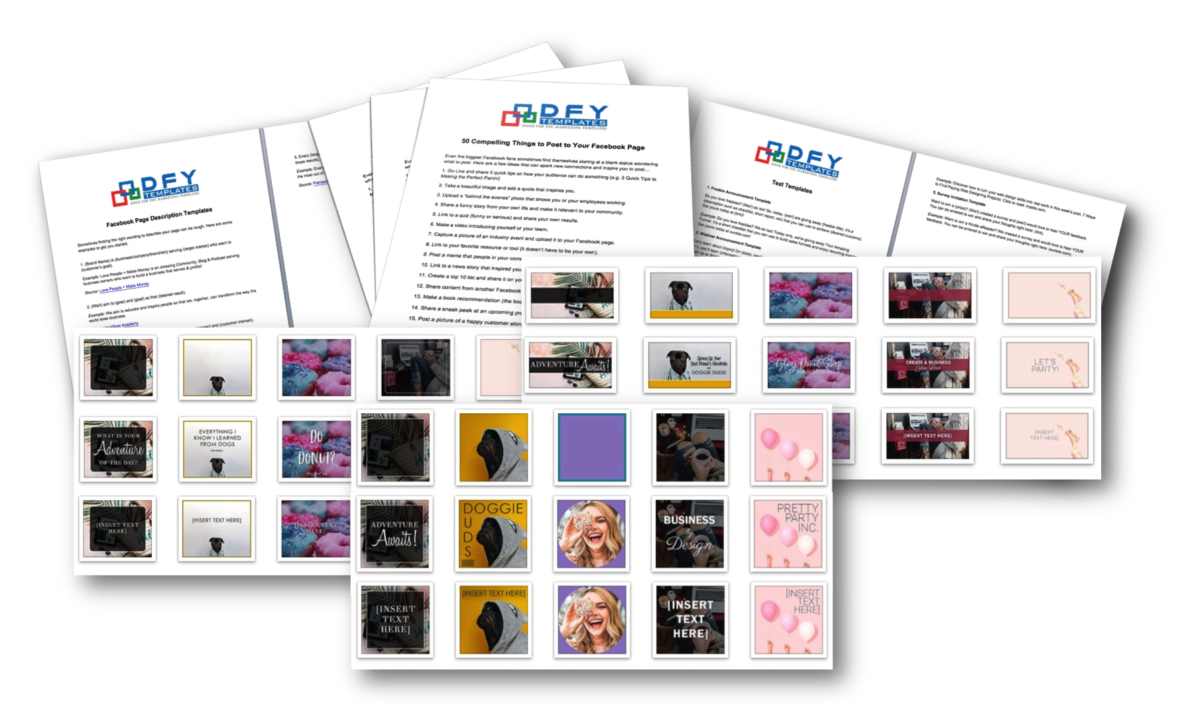
    Here’s a quick peek at the templates…

    Fill-in-the-Blanks Instagram Templates

    Just go here for full details and discover her unique formula for Instagram traffic.

    [jazzyoptin form_id=”1″]